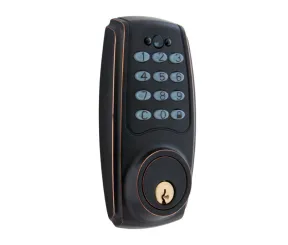
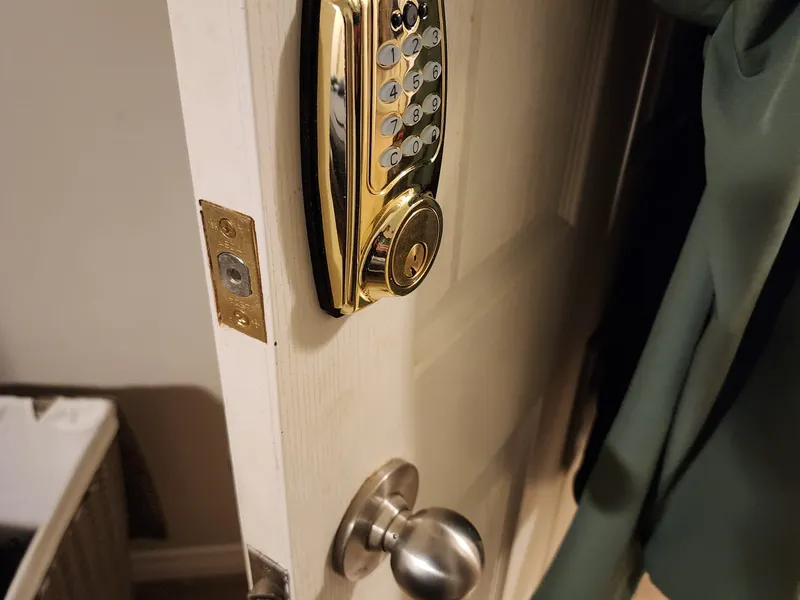
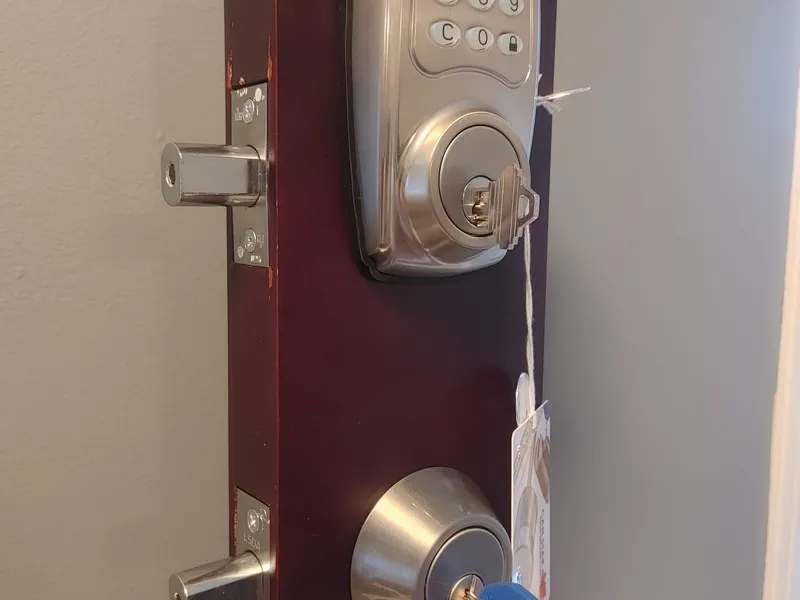
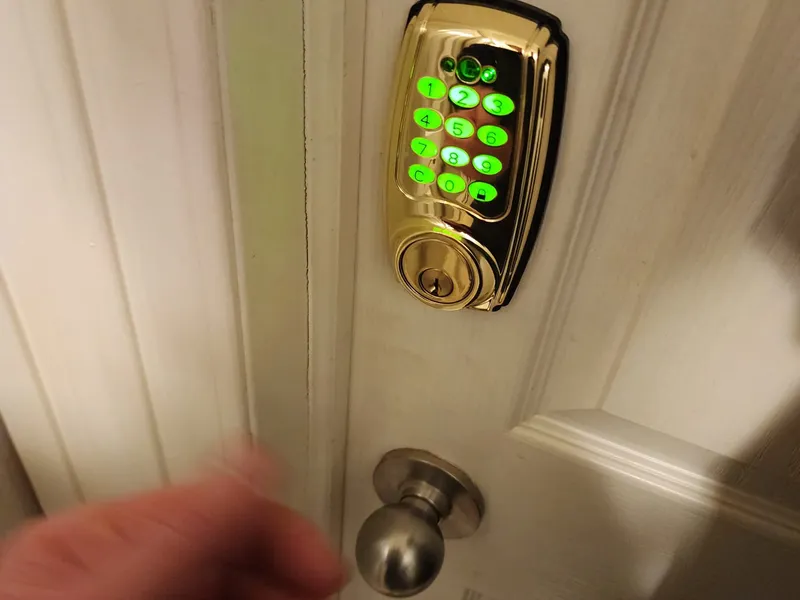
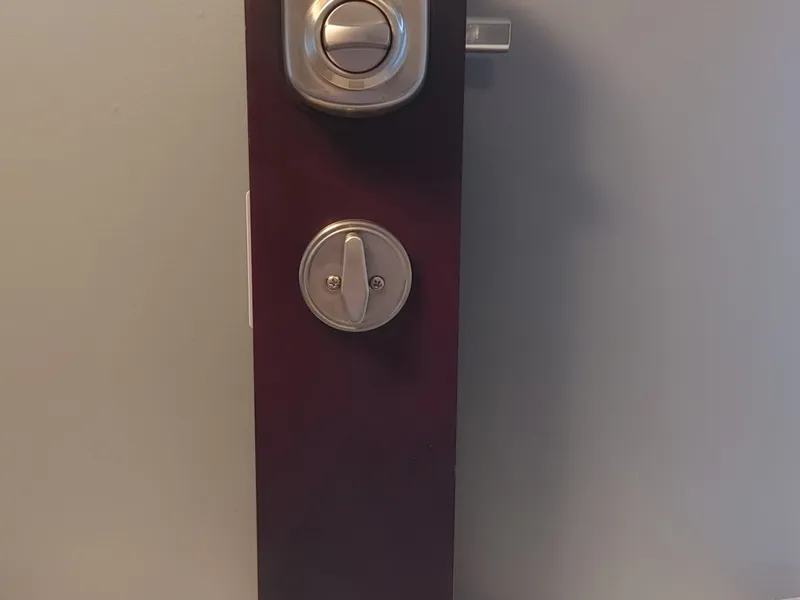
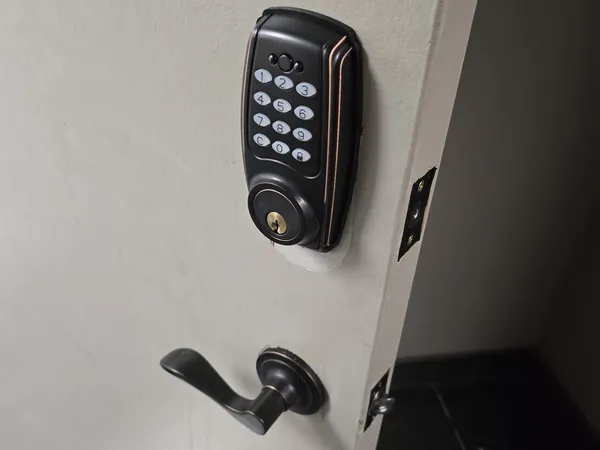
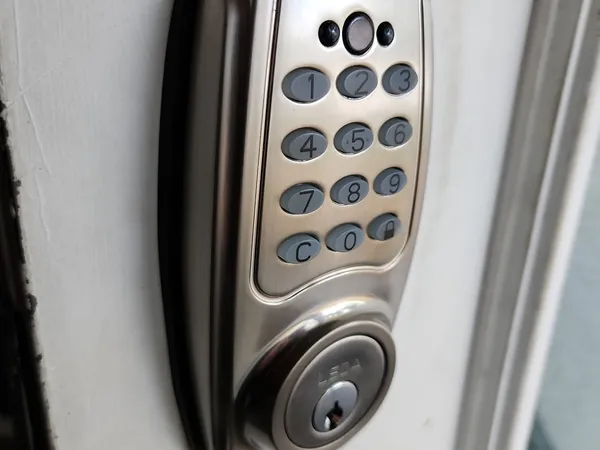
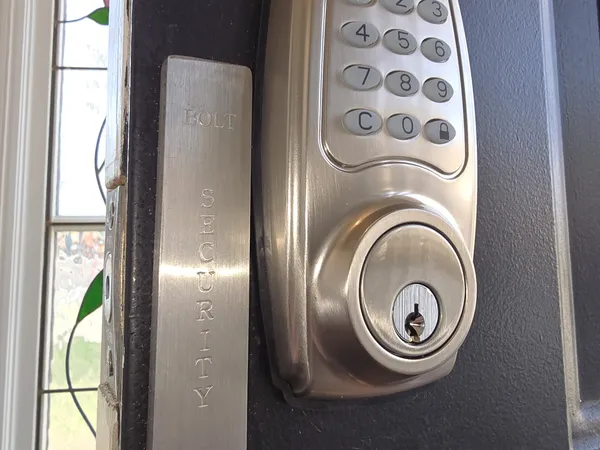
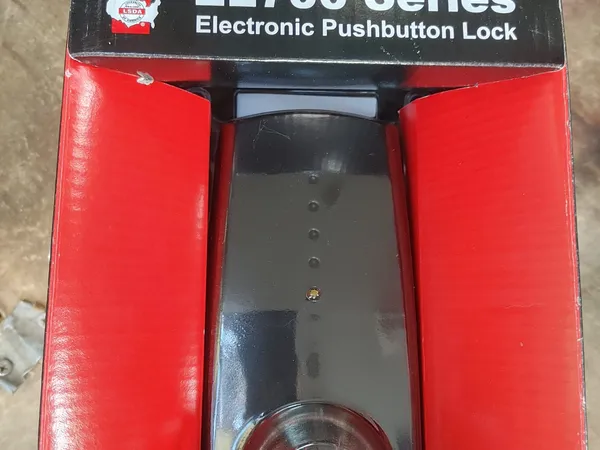
Inside the lock, a motorized actuator turns the bolt when it receives a verified signal through Bluetooth, Wi-Fi, or Z-Wave. Most smart locks still accept a physical key as a backup. Others (like the Yale Assure SL and Level Lock) eliminate the keyhole entirely, creating a cleaner look and removing one traditional attack vector.
Smart locks add real convenience: generate temporary codes for dog walkers, auto-lock behind you, and check lock status from anywhere with Wi-Fi connectivity.
One honest note: a smart lock strengthens access control, but it does not replace a comprehensive security system. Pairing keyless entry with solid door hardware, a reinforced strike plate, and a monitored alarm delivers far better protection than any single device alone.